Enterprise AI  ·  Cloud Architecture  ·  AI-Agent Security Research

Gowthaman Arumugam

AI Architect & Enterprise Solutions Architect

Technology leader with 13+ years architecting large-scale, cloud-native and AI-powered platforms for regulated industries — and an independent researcher building open-source defenses and benchmarks for the AI-agent (MCP) ecosystem. I translate business priorities into secure, compliant, measurable architecture.

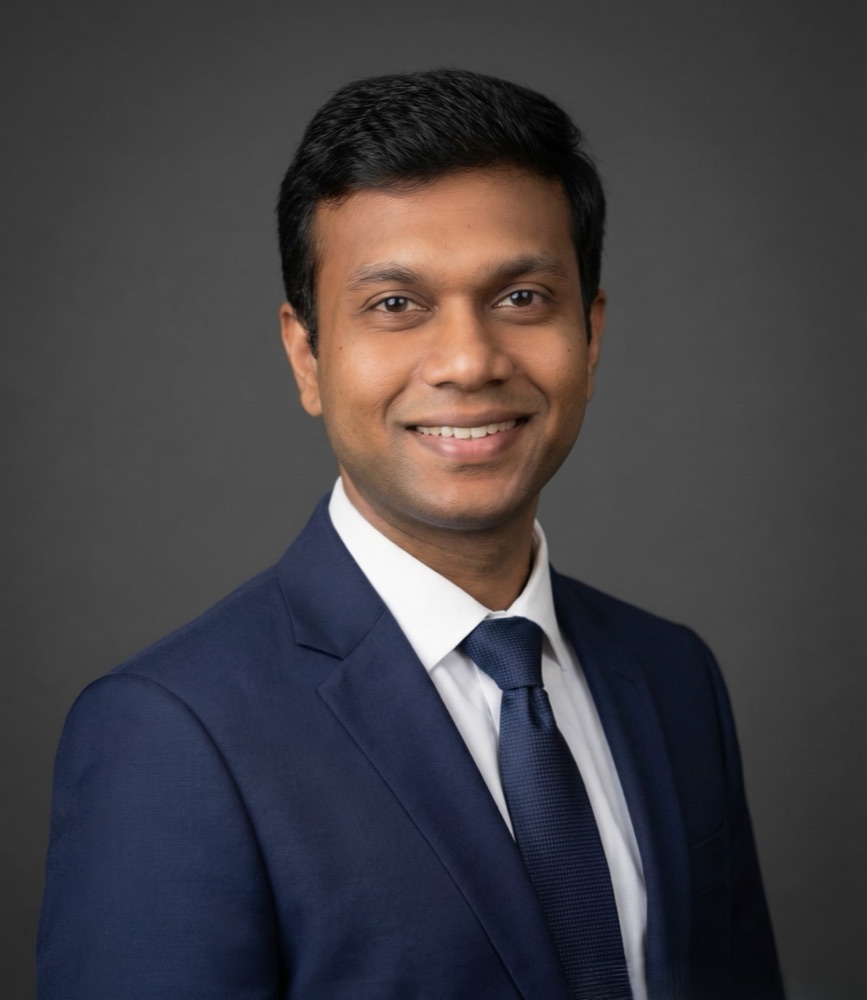
Gowthaman Arumugam — professional portrait
13+
years in enterprise architecture
32
MCP attack vectors benchmarked & mapped to 7 frameworks
61%
measured attack-surface coverage — broadest of any tool on the public leaderboard
9
large-scale enterprise platforms delivered

About

Architecture as a discipline of trust

I operate at the intersection of two demanding disciplines. As an enterprise architect, I have spent over a decade designing and delivering mission-critical platforms — mortgage origination systems, payment processing, multi-tenant SaaS, real-time data streaming — for clients in banking, financial services, and global manufacturing. As an AI architect and security researcher, I design the guardrails that let organizations adopt AI agents with confidence: runtime defenses, governance frameworks, and open benchmarks mapped to the standards regulators actually use (NIST AI RMF, NSA MCP guidance, OWASP).

The through-line is the same in both: an architecture is only as good as what it can prove. Provable availability, provable compliance, provable security coverage. That conviction shaped a research program whose central artifact is the first open, vendor-neutral benchmark of MCP defensive tooling — and a security proxy that the benchmark itself drove from 9% to 61% measured coverage, then held to account with a pre-registered held-out test set.

Architecture Practice

Two complementary disciplines, one standard of rigor

AI & Generative AI Architecture

Enterprise GenAI strategy → governed production platforms

  • GenAI platforms & LLM integration — Azure OpenAI, Copilot Studio, RAG patterns, MCP servers, LangChain / LangGraph / LangSmith
  • AI strategy & governance — GenAI roadmapping, responsible & ethical AI, model explainability, audit-ready architectures
  • Document intelligence — AI-powered extraction platforms automating 50K+ documents annually with privacy & compliance controls built in
  • Full GenAI lifecycle ownership — use-case discovery, architecture, secure deployment, monitoring, continuous optimization
  • AI-ready data platforms — Microsoft Fabric, Azure Data Factory, Kafka, real-time pipelines feeding AI workloads
  • AI-agent security — MCP threat modeling, runtime defense, framework crosswalks (NIST AI RMF · NSA · OWASP LLM/Agentic)

70% faster document processing · $2.4M projected annual savings · time-to-production cut from 6 months to 8 weeks · 85% user adoption

Solution & Technical Architecture

Cloud-native systems engineered for scale, availability & compliance

  • Cloud modernization — on-prem → AWS / Azure migrations with high availability, security, and regulatory compliance
  • Distributed systems — microservices & event-driven design; high-throughput real-time rules engines for enterprise decisioning
  • Data engineering — ETL/ELT architectures, Azure Data Factory, Kafka streaming, cloud ↔ on-prem synchronization
  • Full-stack delivery — React, TypeScript, Node.js, .NET Core, Java Spring Boot, Python; multi-tenant SaaS at 50K+ MAU
  • DevOps & reliability — IaC, CI/CD (GitHub Actions, Azure DevOps, AWS CodePipeline), observability, fault-tolerant design
  • Identity & security — OAuth, Azure AD, SAML, JWT, LDAP for B2B/B2C; data governance and policy-compliant architecture

99.9% platform uptime · 30% infrastructure cost reduction · 70% less duplicate UI code via design-token component library · 35% faster feature delivery

Research & Open Source

Securing the AI-agent ecosystem — openly, measurably

The Model Context Protocol (MCP) is the de-facto standard connecting AI agents to tools and data — fast becoming critical infrastructure for enterprise and government AI. My independent research builds defenses for this layer and, uniquely, an open, vendor-neutral way to measure how well any defensive tool covers the MCP attack surface, crosswalked to NIST AI RMF, NSA MCP guidance, and the OWASP LLM & Agentic Top 10s.

Security ProxyTypeScriptApache-2.0v1.0 · MCP SDK 2.0

🛡️ mcp-bastion

Runtime reliability & security proxy for the Model Context Protocol

Sits between any MCP client (Claude Code, Cursor, Cline, Windsurf, Zed…) and its servers — self-healing connections, runtime tool-security, and a compliance-mapped audit trail. Defends against documented MCP attacks: tool poisoning, rug-pulls, cross-server exfiltration, command injection, server impersonation. v1.0 (September 2026) is rebuilt on the MCP SDK 2.0 line and speaks both protocol eras — adding the two defences only a gateway can provide once the protocol is stateless: custody of the in-band continuation state and a consent gate on in-band input requests.

  • 61% measured coverage of a 32-vector attack surface — broadest of any tool on the public leaderboard; 77% of the vectors introduced by the July 2026 protocol revision
  • Held to account — 55% development vs. 43% held-out on the original 24 vectors, published as measured: structural checks generalise, phrase heuristics do not
  • First measured tool to detect ShareLock's published split-poisoning staging pattern and cross-server data-flow exfiltration; evasion normalisation for zero-width, homoglyph and base64
  • Listed in the official MCP Registry; author-verified on Glama
BenchmarkCC-BY-4.0 dataLive leaderboardv0.8

🧪 mcp-defense-bench

The first open, vendor-neutral benchmark of MCP defensive coverage

While existing benchmarks measure how well an agent resists attacks, mcp-defense-bench measures how much of the MCP attack surface a defensive tool actually covers — every tool driven through its real code, with matched benign controls, coverage reported per protocol revision, and — since September 2026 — three corpora: development, a pre-registered held-out set written after every defender was frozen, and a 337-item benign-only set for a false-positive rate with a confidence interval.

  • 32 attack vectors (8 introduced by the 2026-07-28 protocol revision, verified against the specification text) crosswalked to layer, STRIDE, NIST AI RMF, NSA MCP guidance, OWASP LLM 2025 & Agentic 2026, EU AI Act obligations and ISO/IEC 42001 controls
  • Mapping reliability measured — published rating codebook, blind second-rater pass (κ 0.75 / 0.94), every disagreement adjudicated in the open
  • Benchmark-guided hardening — drove mcp-bastion from 9% → 61%, and from 44% → 77% on the new-era surface; the matched controls caught a false positive in the new defence before release
  • Living benchmark — the first MCP security benchmark versioned against protocol revisions, with a CI regression gate
WhitepaperDOI-archivedUnder peer review

📄 Measuring the Defenders

A Layer-Aware, Framework-Mapped Benchmark for MCP Security Proxies

The research paper behind the benchmark: methodology, the 24-vector threat–control crosswalk, matched-control scoring protocol, and honest results — including where every measured tool, my own included, still falls short. A revised edition incorporating expert peer-review feedback (held-out evaluation, larger benign corpus, inter-rater agreement) is under review at an international security venue.

  • Openly archived with citable DOIs (Figshare + Zenodo)
  • 21 references verified against primary sources
  • Discloses and controls for the developer-evaluator conflict by design — vendor-neutral adapters, null baseline, reproducible runs
Supply-chain SecurityPythonZero deps

🥒 picklefort

Safe loading & scanning of AI/ML model files

Opening a model file can execute arbitrary code the instant you load it — the classic Python pickle risk, actively exploited on public model hubs. picklefort disassembles the pickle stream without executing it and fails closed: an allowlist blocks not just known-bad callables but anything unrecognized.

  • Scans raw pickle and PyTorch-zip formats; safe loader enforces the same policy at load time
  • Pure standard library — zero runtime dependencies
  • CLI with CI-friendly exit codes (picklefort scan --strict model.pt)

Community & ecosystem engagement

  • Proposed a complementary cross-citation with AgentDefense-Bench — positioning coverage completeness and detection accuracy as complementary axes of defense-side measurement
  • Submitted mcp-bastion for independent scoring on the agentshield-benchmark public leaderboard — inviting third-party measurement of my own tool
  • Listed in the official MCP Registry and author-verified on Glama; maintainer-reviewed contributions across the awesome-MCP ecosystem
  • Named peer reviewer on the Cloud Security Alliance Autonomous Pentest Assurance Standard (v0.9): five editor-accepted comment threads on evaluator methodology, provenance binding and adversarial testing
  • Design contribution to the official MCP Registry (publisher identity vs. artifact provenance) — a multi-round technical exchange with independent researchers and engineers
  • Independent scrutiny welcomed and credited: an external researcher's scoring-defect report was adopted as the benchmark's headline metric (changelog)
  • Ongoing research extends this program deeper into AI-agent security evaluation — details to follow after peer review
9% → 61%
benchmark-driven coverage improvement on 32 vectors, every step re-verified
43%
held-out coverage on the original 24 vectors, published beside the 55% development figure
7
frameworks crosswalked — STRIDE · NIST AI RMF · NSA · OWASP LLM · OWASP Agentic · EU AI Act · ISO/IEC 42001
2,500+
npm downloads (Jul–Sep 2026); 12 releases iterated in the open, latest v1.0.2

Writing

Research, explained in the open

I write up the research as it happens — the design decisions, the honest numbers, and the practical how-tos — on Medium and DEV.

MCP securityMedium

MCP Went Stateless: A Security Field Guide to the 2026-07-28 Revision

What the protocol revision removed, the eight attack vectors it introduced, three vendor claims the spec text disproved, and why security state now has exactly one home: the gateway.

Read on Medium →
BenchmarkMedium

Measuring the Defenders: An Honest Benchmark for AI-Agent (MCP) Security

The complete journey — cataloguing the attacks, mapping them onto NIST and OWASP, and measuring real tools — in plain English. Spoiler: no single tool covers more than a third of the attack surface.

Read on Medium →
Benchmark-driven engineeringMediumalso on DEV

From 9% to 63%: Letting a Benchmark Build a Better MCP Security Proxy

You can't improve what you don't measure — using open coverage measurement, one gap at a time, to drive a security proxy from 9% to 63% of the AI-agent attack surface.

Read on Medium →
MCP securityMediumalso on DEV

The MCP Reliability & Security Gap — and an Open-Source Proxy That Fills It

Why the protocol layer connecting AI agents to tools needs a reliability and security proxy — and the design of mcp-bastion.

Read on Medium →
Release engineeringMedium

mcp-bastion v0.3.0: Teaching an MCP Security Proxy to Defend More of the Attack Surface

A hardening release, documented honestly — which newly published attacks it now defends against, and how each was verified.

Read on Medium →
How-toMedium

How to Put mcp-bastion in Front of Your MCP Servers — Quick Setup Guide

A practical walkthrough: adding runtime protection to any MCP client with a one-line config change.

Read on Medium →

Cross-posted for the developer community on DEV: From 9% to 63% ↗ · The MCP Reliability & Security Gap ↗  —  and shared as it happens on LinkedIn ↗

Professional Experience

A track record measured in outcomes

AI Architect

Tata Technologies — Detroit, USA (Remote) · 2026 – Present

  • Defining enterprise AI and GenAI architecture strategy, aligning AI initiatives with business objectives across engineering, operations, and product workflows.
  • Designing AI-powered platforms on Azure OpenAI — agentic workflows, RAG pipelines, and document-intelligence automation — with data privacy and compliance controls built in.
  • Establishing AI governance frameworks: responsible-AI usage, secure data-access patterns, and audit-ready architectures aligned with enterprise security standards.
  • Leading the end-to-end GenAI lifecycle — use-case discovery, architecture, secure deployment, observability, and continuous optimization.
  • Providing architectural leadership and mentorship to engineering teams, setting standards for AI integration and cloud-native design.

AI Architect

Cooper Standard — Texas, USA · 2026

  • Cut enterprise document processing time by 70% with an Azure OpenAI document-intelligence platform automating extraction across 50K+ documents annually, with data privacy and compliance controls built in.
  • Drove $2.4M in projected annual savings by defining enterprise AI/GenAI architecture strategy across 15+ initiatives spanning operations, finance, and customer workflows.
  • Reduced compliance audit prep effort by 40% through AI governance frameworks: responsible-AI usage, secure data-access patterns, audit-ready architectures.
  • Accelerated time-to-production from 6 months to 8 weeks by owning the end-to-end GenAI lifecycle — discovery, architecture, deployment, monitoring, optimization.
  • Delivered 8 high-impact AI use cases at 85% user adoption; achieved 99.9% uptime and 30% infrastructure cost reduction on cloud-native AI platforms.

Technical & Solution Architect

Softura — Plano, TX · 2019 – 2026

  • Architected enterprise cloud modernization programs — seamless on-prem → AWS/Azure migrations engineered for high availability, security, and compliance.
  • Delivered 9 large-scale enterprise solutions for clients including Henniges, Cooper Standard, Cummins, and Komatsu.
  • Built an AI-powered document processing platform extracting structured data from purchase orders and invoices across SharePoint and network drives — eliminating manual processing and powering downstream automation.
  • Designed a high-throughput, event-driven rules engine for complex real-time decisioning at enterprise scale, plus real-time streaming architectures for immediate enterprise-wide data availability.
  • Scaled a multi-tenant SaaS document platform (React + TypeScript) to 50K+ monthly active users; a design-token component library cut duplicate UI code by 70% and accelerated delivery by 35%.
  • Led and mentored a 12-member engineering team, setting architectural standards and DevOps/CI-CD practice (IaC, automated pipelines, cloud-native monitoring).

Technology Lead

Mr. Cooper — Chennai, India · 2017 – 2019

  • Led end-to-end architecture of a large-scale mortgage loan origination platform — technical strategy, scalability patterns, integration standards.
  • Designed secure, high-performance APIs (Java Spring Boot, .NET MVC, Node.js) for mission-critical financial workflows; React front-ends that improved operational efficiency.
  • Drove database optimization (indexing, query tuning) for a 30% application performance improvement; delivered Workday integration, SHIELD compliance, and core LOS deployments.
  • Managed and mentored an 8-member Agile engineering team, enforcing architecture and code-review standards.

Senior Software Engineer

Capital One (via Cognizant) — Chennai, India · 2013 – 2017

  • Built and maintained credit-card payment processing systems (Mainframe COBOL, JCL, Core Java, Unix) supporting high-volume financial transactions.
  • Engineered real-time transaction processing and fraud-detection workflows, reducing fraud false positives by 20%.
  • Partnered cross-functionally on production troubleshooting, reliability, and stringent financial regulatory compliance.

Capabilities

Skills & technology matrix

Generative AI & LLMs

Azure OpenAIAzure AI FoundryCopilot StudioMCP ServersRAG PatternsPrompt EngineeringLangChainLangGraphLangSmith

AI Strategy & Governance

GenAI RoadmappingResponsible AIModel ExplainabilityData PrivacyNIST AI RMFOWASP LLM / AgenticAudit-Ready Architecture

Cloud & Infrastructure

AzureAWSMicroservicesEvent-Driven SystemsHigh AvailabilityObservability & SRENetworking / Storage / ComputeDocker

Languages & Frameworks

TypeScript / JavaScriptPythonNode.jsReactJava Spring BootC# / .NET CoreUnix / ShellMainframe COBOL

Data & Platforms

Microsoft FabricAzure Data FactoryKafkaPostgreSQLMS SQLDB2Cosmos DBDynamoDBMongoDBRedisData Modeling

Security & Identity

OAuthAzure ADSAMLJWTLDAPB2B / B2C IdentityThreat Modeling (STRIDE)Data Governance

DevOps & Delivery

GitHub ActionsAzure DevOpsAWS CodePipelineInfrastructure as CodeCI/CDRelease Engineering

Leadership & Domain

Executive CommunicationArchitecture GovernanceTeam Mentorship (8–12 engineers)Technical ConsultingBanking & Financial ServicesManufacturing

Education

Foundations

Post Graduate Diploma in Business Administration

Symbiosis University — Pune, India · 2015

Operations Management — agility in software development

Bachelor of Engineering

Sathyabama University — Chennai, India · 2012

Electronics, Communication & Computer Programming

Contact

Let's build something provable

Open to conversations on enterprise AI architecture, AI-agent security, research collaboration, and speaking engagements.